

Sudan Humanitarian Crisis: Hunger, Conflict and Hope


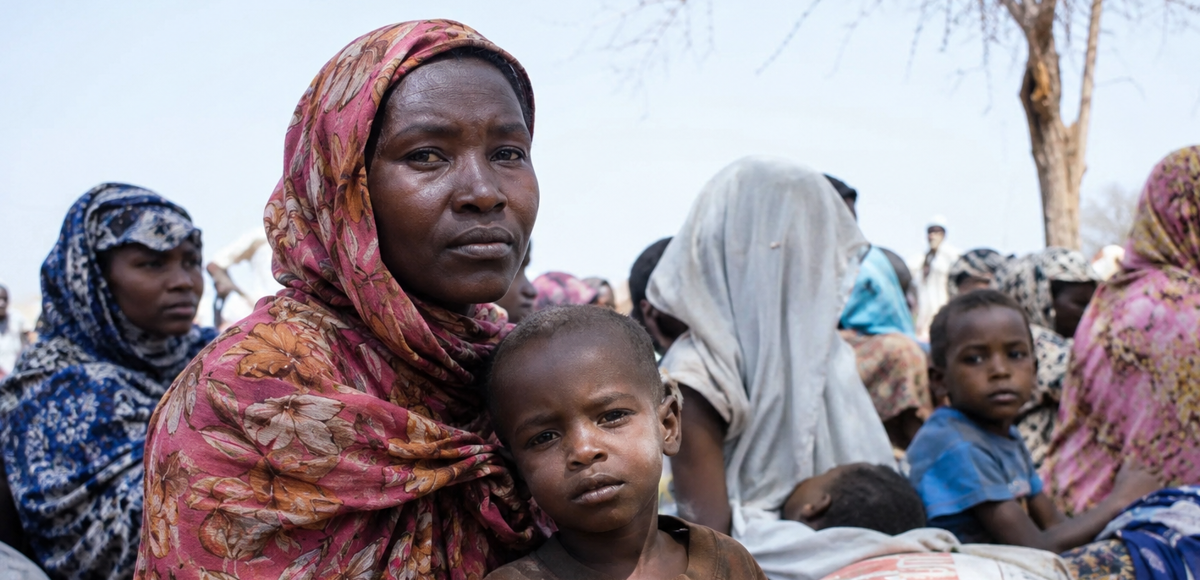
Sudan is currently home to the world's largest humanitarian crisis, and yet it remains one of the least reported. Since fighting broke out between the Sudanese Armed Forces (SAF) and the paramilitary Rapid Support Forces (RSF) in April 2023, the conflict has killed tens of thousands of people and displaced around 14 million more, making it the largest displacement crisis on the planet.
The violence has been most severe in Darfur, where a UN Fact-Finding Mission has concluded that the RSF carried out a coordinated campaign of destruction against non-Arab communities in and around the city of El-Fasher, with mass killings, abductions, and gang rape used as part of a deliberate strategy. The Mission found that this campaign amounted to genocide, building on earlier findings that pointed to the same conclusion. The UN's human rights chief has described the situation as bearing the clear hallmarks of genocide, targeting Zaghawa and Fur communities in particular, through mass killings and the deliberate infliction of conditions designed to destroy them.
Alongside the violence, Sudan is facing catastrophic hunger. Both warring parties have been reported to use access to food as a weapon, blocking aid routes and besieging cities for months and even years at a time. Areas of Darfur and Kordofan have seen famine-like conditions take hold, with hundreds of thousands of people facing starvation. Humanitarian access remains one of the single biggest obstacles to getting help to the people who need it, with aid convoys frequently blocked, delayed, or attacked.
This is the reality behind the headlines: families cut off from food for months, children growing up in famine conditions, and communities targeted for who they are rather than anything they have done. It is a crisis that calls for sustained attention, not a moment of it.
What Is International Aid Charity Doing About It?
Food parcels are one of the most direct ways of responding to that hunger. Where access allows, a parcel of basic staples, flour, rice, oil, lentils, and other essentials, can be the difference between a family managing another week and a family going without. In besieged and famine-affected areas, this kind of support often has to travel through difficult and shifting access routes, working with local partners on the ground who understand which communities are cut off and which routes remain safe enough to use.
IAC-UK's food parcel distribution is aimed at reaching families in these hardest-hit areas of Sudan, providing essentials to households who have lost access to markets, income, and often their homes. Distribution is coordinated with partners already working inside Sudan, since local knowledge of access and safety is often what determines whether aid reaches people at all.
The situation in Sudan is unlikely to improve without sustained international attention and sustained support. Awareness is the first step. It means understanding what is happening, and why it has been allowed to continue for this long. Support for food distribution and other frontline relief is the second step, a way of making sure that, whatever happens politically, families in Sudan are not left without the basics they need to survive.
Share Article